mirror of
https://github.com/AstrBotDevs/AstrBot
synced 2026-07-20 10:57:22 +08:00
 fc33b3eb68
* docs: transfer AstrBotDevs/AstrBot-docs to AstrBotDevs/AstrBot
* refactor: reorder imports and improve type hints in sync_docs_to_wiki.py and upload_doc_images_to_r2.py
* feat: add GitHub Actions workflow to sync wiki with documentation

Co-authored-by: Soulter <37870767+Soulter@users.noreply.github.com>
Co-authored-by: anka-afk <110004162+anka-afk@users.noreply.github.com>
Co-authored-by: zouyonghe <62183434+zouyonghe@users.noreply.github.com>
Co-authored-by: shuiping233 <49360196+shuiping233@users.noreply.github.com>
Co-authored-by: LIghtJUNction <106986785+LIghtJUNction@users.noreply.github.com>
Co-authored-by: Sjshi763 <179909421+Sjshi763@users.noreply.github.com>
Co-authored-by: xiewoc <70128845+xiewoc@users.noreply.github.com>
Co-authored-by: QingFeng-awa <151742581+QingFeng-awa@users.noreply.github.com>
Co-authored-by: PaloMiku <96452465+PaloMiku@users.noreply.github.com>
Co-authored-by: shangxueink <138397030+shangxueink@users.noreply.github.com>
Co-authored-by: IGCrystal-A <244300990+IGCrystal-A@users.noreply.github.com>
Co-authored-by: RC-CHN <67079377+RC-CHN@users.noreply.github.com>
Co-authored-by: MC090610 <113341105+MC090610@users.noreply.github.com>
Co-authored-by: Waterwzy <196913419+Waterwzy@users.noreply.github.com>
Co-authored-by: Lanhuace-Wan <186303160+Lanhuace-Wan@users.noreply.github.com>
Co-authored-by: LiAlH4qwq <61769640+LiAlH4qwq@users.noreply.github.com>
Co-authored-by: HSOS6 <209910899+HSOS6@users.noreply.github.com>
Co-authored-by: th-dd <162813557+th-dd@users.noreply.github.com>
Co-authored-by: miaoxutao123 <81676466+miaoxutao123@users.noreply.github.com>
Co-authored-by: nuomicici <143102889+nuomicici@users.noreply.github.com>
Co-authored-by: nasyt233 <210103278+nasyt233@users.noreply.github.com>
Co-authored-by: jlugjb <7426462+jlugjb@users.noreply.github.com>
Co-authored-by: Raven95676 <176760093+Raven95676@users.noreply.github.com>
Co-authored-by: Futureppo <180109455+Futureppo@users.noreply.github.com>
Co-authored-by: MliKiowa <61873808+MliKiowa@users.noreply.github.com>
Co-authored-by: Fridemn <150212937+Fridemn@users.noreply.github.com>
Co-authored-by: BakaCookie520 <138355736+BakaCookie520@users.noreply.github.com>
Co-authored-by: YumeYuka <125112916+YumeYuka@users.noreply.github.com>
Co-authored-by: xming521 <32786500+xming521@users.noreply.github.com>
Co-authored-by: ywh555hhh <121592812+ywh555hhh@users.noreply.github.com>
Co-authored-by: stevessr <89645372+stevessr@users.noreply.github.com>
Co-authored-by: roeseth <41995115+roeseth@users.noreply.github.com>
Co-authored-by: ikun-1145141 <265925499+ikun-1145141@users.noreply.github.com>
Co-authored-by: evpeople <54983536+evpeople@users.noreply.github.com>
Co-authored-by: Yue-bin <60509781+Yue-bin@users.noreply.github.com>
Co-authored-by: W1ndys <109416673+W1ndys@users.noreply.github.com>
Co-authored-by: TheFurina <218887821+TheFurina@users.noreply.github.com>
Co-authored-by: Seayon <12275933+Seayon@users.noreply.github.com>
Co-authored-by: OnlyblackTea <38585636+OnlyblackTea@users.noreply.github.com>
Co-authored-by: ocetars <74854972+ocetars@users.noreply.github.com>
Co-authored-by: railgun19457 <117180744+railgun19457@users.noreply.github.com>
Co-authored-by: JunieXD <107397009+JunieXD@users.noreply.github.com>
Co-authored-by: advent259141 <197440256+advent259141@users.noreply.github.com>
Co-authored-by: Doge2077 <91442300+Doge2077@users.noreply.github.com>
Co-authored-by: Bocity <23430545+Bocity@users.noreply.github.com>
Co-authored-by: Aurora-xk <192227833+Aurora-xk@users.noreply.github.com>
554 lines
18 KiB
Markdown
554 lines
18 KiB
Markdown
|
||
# AI
|
||
|
||
AstrBot 内置了对多种大语言模型(LLM)提供商的支持,并且提供了统一的接口,方便插件开发者调用各种 LLM 服务。
|
||
|
||
您可以使用 AstrBot 提供的 LLM / Agent 接口来实现自己的智能体。
|
||
|
||
我们在 `v4.5.7` 版本之后对 LLM 提供商的调用方式进行了较大调整,推荐使用新的调用方式。新的调用方式更加简洁,并且支持更多的功能。当然,您仍然可以使用[旧的调用方式](/dev/star/plugin#ai)。
|
||
|
||
## 获取当前会话使用的聊天模型 ID
|
||
|
||
> [!TIP]
|
||
> 在 v4.5.7 时加入
|
||
|
||
```py
|
||
umo = event.unified_msg_origin
|
||
provider_id = await self.context.get_current_chat_provider_id(umo=umo)
|
||
```
|
||
|
||
## 调用大模型
|
||
|
||
> [!TIP]
|
||
> 在 v4.5.7 时加入
|
||
|
||
```py
|
||
llm_resp = await self.context.llm_generate(
|
||
chat_provider_id=provider_id, # 聊天模型 ID
|
||
prompt="Hello, world!",
|
||
)
|
||
# print(llm_resp.completion_text) # 获取返回的文本
|
||
```
|
||
|
||
## 定义 Tool
|
||
|
||
Tool 是大语言模型调用外部工具的能力。
|
||
|
||
```py
|
||
from pydantic import Field
|
||
from pydantic.dataclasses import dataclass
|
||
|
||
from astrbot.core.agent.run_context import ContextWrapper
|
||
from astrbot.core.agent.tool import FunctionTool, ToolExecResult
|
||
from astrbot.core.astr_agent_context import AstrAgentContext
|
||
|
||
|
||
@dataclass
|
||
class BilibiliTool(FunctionTool[AstrAgentContext]):
|
||
name: str = "bilibili_videos" # 工具名称
|
||
description: str = "A tool to fetch Bilibili videos." # 工具描述
|
||
parameters: dict = Field(
|
||
default_factory=lambda: {
|
||
"type": "object",
|
||
"properties": {
|
||
"keywords": {
|
||
"type": "string",
|
||
"description": "Keywords to search for Bilibili videos.",
|
||
},
|
||
},
|
||
"required": ["keywords"],
|
||
}
|
||
)
|
||
|
||
async def call(
|
||
self, context: ContextWrapper[AstrAgentContext], **kwargs
|
||
) -> ToolExecResult:
|
||
return "1. 视频标题:如何使用AstrBot\n视频链接:xxxxxx"
|
||
```
|
||
|
||
## 注册 Tool 到 AstrBot
|
||
|
||
在上面定义好 Tool 之后,如果你需要实现的功能是让用户在使用 AstrBot 进行对话时自动调用该 Tool,那么你需要在插件的 __init__ 方法中将 Tool 注册到 AstrBot 中:
|
||
|
||
```py
|
||
class MyPlugin(Star):
|
||
def __init__(self, context: Context):
|
||
super().__init__(context)
|
||
# >= v4.5.1 使用:
|
||
self.context.add_llm_tools(BilibiliTool(), SecondTool(), ...)
|
||
|
||
# < v4.5.1 之前使用:
|
||
tool_mgr = self.context.provider_manager.llm_tools
|
||
tool_mgr.func_list.append(BilibiliTool())
|
||
```
|
||
|
||
### 通过装饰器定义 Tool 和注册 Tool
|
||
|
||
除了上述的通过 `@dataclass` 定义 Tool 的方式之外,你也可以使用装饰器的方式注册 tool 到 AstrBot。如果请务必按照以下格式编写一个工具(包括函数注释,AstrBot 会解析该函数注释,请务必将注释格式写对)
|
||
|
||
```py{3,4,5,6,7}
|
||
@filter.llm_tool(name="get_weather") # 如果 name 不填,将使用函数名
|
||
async def get_weather(self, event: AstrMessageEvent, location: str) -> MessageEventResult:
|
||
'''获取天气信息。
|
||
|
||
Args:
|
||
location(string): 地点
|
||
'''
|
||
resp = self.get_weather_from_api(location)
|
||
yield event.plain_result("天气信息: " + resp)
|
||
```
|
||
|
||
在 `location(string): 地点` 中,`location` 是参数名,`string` 是参数类型,`地点` 是参数描述。
|
||
|
||
支持的参数类型有 `string`, `number`, `object`, `boolean`, `array`。在 v4.5.7 之后,支持对 `array` 类型参数指定子类型,例如 `array[string]`。
|
||
|
||
## 调用 Agent
|
||
|
||
> [!TIP]
|
||
> 在 v4.5.7 时加入
|
||
|
||
Agent 可以被定义为 system_prompt + tools + llm 的结合体,可以实现更复杂的智能体行为。
|
||
|
||
在上面定义好 Tool 之后,可以通过以下方式调用 Agent:
|
||
|
||
```py
|
||
llm_resp = await self.context.tool_loop_agent(
|
||
event=event,
|
||
chat_provider_id=prov_id,
|
||
prompt="搜索一下 bilibili 上关于 AstrBot 的相关视频。",
|
||
tools=ToolSet([BilibiliTool()]),
|
||
max_steps=30, # Agent 最大执行步骤
|
||
tool_call_timeout=60, # 工具调用超时时间
|
||
)
|
||
# print(llm_resp.completion_text) # 获取返回的文本
|
||
```
|
||
|
||
`tool_loop_agent()` 方法会自动处理工具调用和大模型请求的循环,直到大模型不再调用工具或者达到最大步骤数为止。
|
||
|
||
## Multi-Agent
|
||
|
||
> [!TIP]
|
||
> 在 v4.5.7 时加入
|
||
|
||
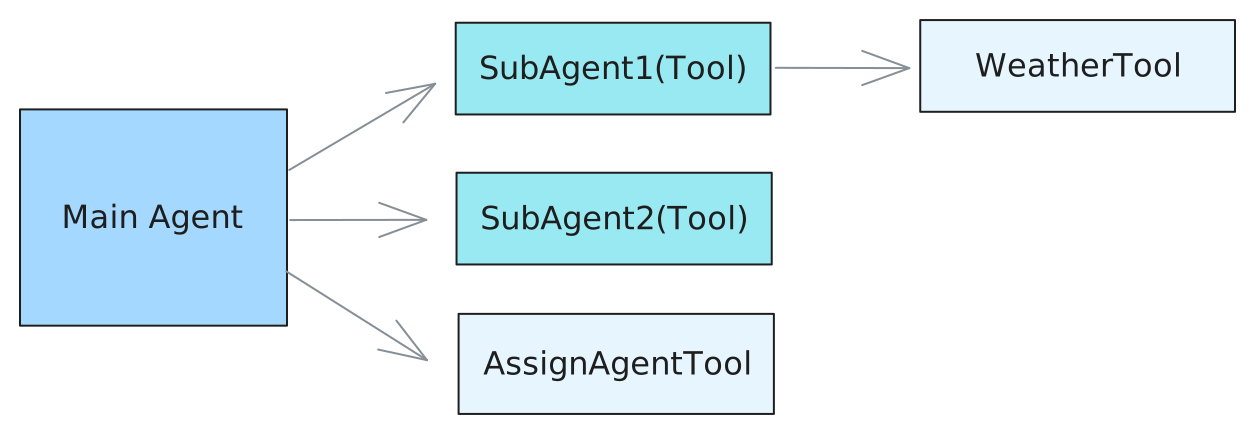
Multi-Agent(多智能体)系统将复杂应用分解为多个专业化智能体,它们协同解决问题。不同于依赖单个智能体处理每一步,多智能体架构允许将更小、更专注的智能体组合成协调的工作流程。我们使用 `agent-as-tool` 模式来实现多智能体系统。
|
||
|
||
在下面的例子中,我们定义了一个主智能体(Main Agent),它负责根据用户查询将任务分配给不同的子智能体(Sub-Agents)。每个子智能体专注于特定任务,例如获取天气信息。
|
||
|
||
|
||
|
||
定义 Tools:
|
||
|
||
```py
|
||
from pydantic import Field
|
||
from pydantic.dataclasses import dataclass
|
||
|
||
from astrbot.core.agent.run_context import ContextWrapper
|
||
from astrbot.core.agent.tool import FunctionTool, ToolExecResult
|
||
from astrbot.core.astr_agent_context import AstrAgentContext
|
||
|
||
@dataclass
|
||
class AssignAgentTool(FunctionTool[AstrAgentContext]):
|
||
"""Main agent uses this tool to decide which sub-agent to delegate a task to."""
|
||
|
||
name: str = "assign_agent"
|
||
description: str = "Assign an agent to a task based on the given query"
|
||
parameters: dict = Field(
|
||
default_factory=lambda: {
|
||
"type": "object",
|
||
"properties": {
|
||
"query": {
|
||
"type": "string",
|
||
"description": "The query to call the sub-agent with.",
|
||
},
|
||
},
|
||
"required": ["query"],
|
||
}
|
||
)
|
||
|
||
async def call(
|
||
self, context: ContextWrapper[AstrAgentContext], **kwargs
|
||
) -> ToolExecResult:
|
||
# Here you would implement the actual agent assignment logic.
|
||
# For demonstration purposes, we'll return a dummy response.
|
||
return "Based on the query, you should assign agent 1."
|
||
|
||
|
||
@dataclass
|
||
class WeatherTool(FunctionTool[AstrAgentContext]):
|
||
"""In this example, sub agent 1 uses this tool to get weather information."""
|
||
|
||
name: str = "weather"
|
||
description: str = "Get weather information for a location"
|
||
parameters: dict = Field(
|
||
default_factory=lambda: {
|
||
"type": "object",
|
||
"properties": {
|
||
"city": {
|
||
"type": "string",
|
||
"description": "The city to get weather information for.",
|
||
},
|
||
},
|
||
"required": ["city"],
|
||
}
|
||
)
|
||
|
||
async def call(
|
||
self, context: ContextWrapper[AstrAgentContext], **kwargs
|
||
) -> ToolExecResult:
|
||
city = kwargs["city"]
|
||
# Here you would implement the actual weather fetching logic.
|
||
# For demonstration purposes, we'll return a dummy response.
|
||
return f"The current weather in {city} is sunny with a temperature of 25°C."
|
||
|
||
|
||
@dataclass
|
||
class SubAgent1(FunctionTool[AstrAgentContext]):
|
||
"""Define a sub-agent as a function tool."""
|
||
|
||
name: str = "subagent1_name"
|
||
description: str = "subagent1_description"
|
||
parameters: dict = Field(
|
||
default_factory=lambda: {
|
||
"type": "object",
|
||
"properties": {
|
||
"query": {
|
||
"type": "string",
|
||
"description": "The query to call the sub-agent with.",
|
||
},
|
||
},
|
||
"required": ["query"],
|
||
}
|
||
)
|
||
|
||
async def call(
|
||
self, context: ContextWrapper[AstrAgentContext], **kwargs
|
||
) -> ToolExecResult:
|
||
ctx = context.context.context
|
||
event = context.context.event
|
||
logger.info(f"the llm context messages: {context.messages}")
|
||
llm_resp = await ctx.tool_loop_agent(
|
||
event=event,
|
||
chat_provider_id=await ctx.get_current_chat_provider_id(
|
||
event.unified_msg_origin
|
||
),
|
||
prompt=kwargs["query"],
|
||
tools=ToolSet([WeatherTool()]),
|
||
max_steps=30,
|
||
)
|
||
return llm_resp.completion_text
|
||
|
||
|
||
@dataclass
|
||
class SubAgent2(FunctionTool[AstrAgentContext]):
|
||
"""Define a sub-agent as a function tool."""
|
||
|
||
name: str = "subagent2_name"
|
||
description: str = "subagent2_description"
|
||
parameters: dict = Field(
|
||
default_factory=lambda: {
|
||
"type": "object",
|
||
"properties": {
|
||
"query": {
|
||
"type": "string",
|
||
"description": "The query to call the sub-agent with.",
|
||
},
|
||
},
|
||
"required": ["query"],
|
||
}
|
||
)
|
||
|
||
async def call(
|
||
self, context: ContextWrapper[AstrAgentContext], **kwargs
|
||
) -> ToolExecResult:
|
||
return "I am useless :(, you shouldn't call me :("
|
||
```
|
||
|
||
然后,同样地,通过 `tool_loop_agent()` 方法调用 Agent:
|
||
|
||
```py
|
||
@filter.command("test")
|
||
async def test(self, event: AstrMessageEvent):
|
||
umo = event.unified_msg_origin
|
||
prov_id = await self.context.get_current_chat_provider_id(umo)
|
||
llm_resp = await self.context.tool_loop_agent(
|
||
event=event,
|
||
chat_provider_id=prov_id,
|
||
prompt="Test calling sub-agent for Beijing's weather information.",
|
||
system_prompt=(
|
||
"You are the main agent. Your task is to delegate tasks to sub-agents based on user queries."
|
||
"Before delegating, use the 'assign_agent' tool to determine which sub-agent is best suited for the task."
|
||
),
|
||
tools=ToolSet([SubAgent1(), SubAgent2(), AssignAgentTool()]),
|
||
max_steps=30,
|
||
)
|
||
yield event.plain_result(llm_resp.completion_text)
|
||
```
|
||
|
||
## 对话管理器
|
||
|
||
### 获取会话当前的 LLM 对话历史 `get_conversation`
|
||
|
||
```py
|
||
from astrbot.core.conversation_mgr import Conversation
|
||
|
||
uid = event.unified_msg_origin
|
||
conv_mgr = self.context.conversation_manager
|
||
curr_cid = await conv_mgr.get_curr_conversation_id(uid)
|
||
conversation = await conv_mgr.get_conversation(uid, curr_cid) # Conversation
|
||
```
|
||
|
||
::: details Conversation 类型定义
|
||
|
||
```py
|
||
@dataclass
|
||
class Conversation:
|
||
"""The conversation entity representing a chat session."""
|
||
|
||
platform_id: str
|
||
"""The platform ID in AstrBot"""
|
||
user_id: str
|
||
"""The user ID associated with the conversation."""
|
||
cid: str
|
||
"""The conversation ID, in UUID format."""
|
||
history: str = ""
|
||
"""The conversation history as a string."""
|
||
title: str | None = ""
|
||
"""The title of the conversation. For now, it's only used in WebChat."""
|
||
persona_id: str | None = ""
|
||
"""The persona ID associated with the conversation."""
|
||
created_at: int = 0
|
||
"""The timestamp when the conversation was created."""
|
||
updated_at: int = 0
|
||
"""The timestamp when the conversation was last updated."""
|
||
```
|
||
|
||
:::
|
||
|
||
### 快速添加 LLM 记录到对话 `add_message_pair`
|
||
|
||
```py
|
||
from astrbot.core.agent.message import (
|
||
AssistantMessageSegment,
|
||
UserMessageSegment,
|
||
TextPart,
|
||
)
|
||
|
||
curr_cid = await conv_mgr.get_curr_conversation_id(event.unified_msg_origin)
|
||
user_msg = UserMessageSegment(content=[TextPart(text="hi")])
|
||
llm_resp = await self.context.llm_generate(
|
||
chat_provider_id=provider_id, # 聊天模型 ID
|
||
contexts=[user_msg], # 当未指定 prompt 时,使用 contexts 作为输入;同时指定 prompt 和 contexts 时,prompt 会被添加到 LLM 输入的最后
|
||
)
|
||
await conv_mgr.add_message_pair(
|
||
cid=curr_cid,
|
||
user_message=user_msg,
|
||
assistant_message=AssistantMessageSegment(
|
||
content=[TextPart(text=llm_resp.completion_text)]
|
||
),
|
||
)
|
||
```
|
||
|
||
### 主要方法
|
||
|
||
#### `new_conversation`
|
||
|
||
- __Usage__
|
||
在当前会话中新建一条对话,并自动切换为该对话。
|
||
- __Arguments__
|
||
- `unified_msg_origin: str` – 形如 `platform_name:message_type:session_id`
|
||
- `platform_id: str | None` – 平台标识,默认从 `unified_msg_origin` 解析
|
||
- `content: list[dict] | None` – 初始历史消息
|
||
- `title: str | None` – 对话标题
|
||
- `persona_id: str | None` – 绑定的 persona ID
|
||
- __Returns__
|
||
`str` – 新生成的 UUID 对话 ID
|
||
|
||
#### `switch_conversation`
|
||
|
||
- __Usage__
|
||
将会话切换到指定的对话。
|
||
- __Arguments__
|
||
- `unified_msg_origin: str`
|
||
- `conversation_id: str`
|
||
- __Returns__
|
||
`None`
|
||
|
||
#### `delete_conversation`
|
||
|
||
- __Usage__
|
||
删除会话中的某条对话;若 `conversation_id` 为 `None`,则删除当前对话。
|
||
- __Arguments__
|
||
- `unified_msg_origin: str`
|
||
- `conversation_id: str | None`
|
||
- __Returns__
|
||
`None`
|
||
|
||
#### `get_curr_conversation_id`
|
||
|
||
- __Usage__
|
||
获取当前会话正在使用的对话 ID。
|
||
- __Arguments__
|
||
- `unified_msg_origin: str`
|
||
- __Returns__
|
||
`str | None` – 当前对话 ID,不存在时返回 `None`
|
||
|
||
#### `get_conversation`
|
||
|
||
- __Usage__
|
||
获取指定对话的完整对象;若不存在且 `create_if_not_exists=True` 则自动创建。
|
||
- __Arguments__
|
||
- `unified_msg_origin: str`
|
||
- `conversation_id: str`
|
||
- `create_if_not_exists: bool = False`
|
||
- __Returns__
|
||
`Conversation | None`
|
||
|
||
#### `get_conversations`
|
||
|
||
- __Usage__
|
||
拉取用户或平台下的全部对话列表。
|
||
- __Arguments__
|
||
- `unified_msg_origin: str | None` – 为 `None` 时不过滤用户
|
||
- `platform_id: str | None`
|
||
- __Returns__
|
||
`List[Conversation]`
|
||
|
||
#### `update_conversation`
|
||
|
||
- __Usage__
|
||
更新对话的标题、历史记录或 persona_id。
|
||
- __Arguments__
|
||
- `unified_msg_origin: str`
|
||
- `conversation_id: str | None` – 为 `None` 时使用当前对话
|
||
- `history: list[dict] | None`
|
||
- `title: str | None`
|
||
- `persona_id: str | None`
|
||
- __Returns__
|
||
`None`
|
||
|
||
## 人格设定管理器
|
||
|
||
`PersonaManager` 负责统一加载、缓存并提供所有人格(Persona)的增删改查接口,同时兼容 AstrBot 4.x 之前的旧版人格格式(v3)。
|
||
初始化时会自动从数据库读取全部人格,并生成一份 v3 兼容数据,供旧代码无缝使用。
|
||
|
||
```py
|
||
persona_mgr = self.context.persona_manager
|
||
```
|
||
|
||
### 主要方法
|
||
|
||
#### `get_persona`
|
||
|
||
- __Usage__
|
||
获取根据人格 ID 获取人格数据。
|
||
- __Arguments__
|
||
- `persona_id: str` – 人格 ID
|
||
- __Returns__
|
||
`Persona` – 人格数据,若不存在则返回 None
|
||
- __Raises__
|
||
`ValueError` – 当不存在时抛出
|
||
|
||
#### `get_all_personas`
|
||
|
||
- __Usage__
|
||
一次性获取数据库中所有人格。
|
||
- __Returns__
|
||
`list[Persona]` – 人格列表,可能为空
|
||
|
||
#### `create_persona`
|
||
|
||
- __Usage__
|
||
新建人格并立即写入数据库,成功后自动刷新本地缓存。
|
||
- __Arguments__
|
||
- `persona_id: str` – 新人格 ID(唯一)
|
||
- `system_prompt: str` – 系统提示词
|
||
- `begin_dialogs: list[str]` – 可选,开场对话(偶数条,user/assistant 交替)
|
||
- `tools: list[str]` – 可选,允许使用的工具列表;`None`=全部工具,`[]`=禁用全部
|
||
- __Returns__
|
||
`Persona` – 新建后的人格对象
|
||
- __Raises__
|
||
`ValueError` – 若 `persona_id` 已存在
|
||
|
||
#### `update_persona`
|
||
|
||
- __Usage__
|
||
更新现有人格的任意字段,并同步到数据库与缓存。
|
||
- __Arguments__
|
||
- `persona_id: str` – 待更新的人格 ID
|
||
- `system_prompt: str` – 可选,新的系统提示词
|
||
- `begin_dialogs: list[str]` – 可选,新的开场对话
|
||
- `tools: list[str]` – 可选,新的工具列表;语义同 `create_persona`
|
||
- __Returns__
|
||
`Persona` – 更新后的人格对象
|
||
- __Raises__
|
||
`ValueError` – 若 `persona_id` 不存在
|
||
|
||
#### `delete_persona`
|
||
|
||
- __Usage__
|
||
删除指定人格,同时清理数据库与缓存。
|
||
- __Arguments__
|
||
- `persona_id: str` – 待删除的人格 ID
|
||
- __Raises__
|
||
`Valueable` – 若 `persona_id` 不存在
|
||
|
||
#### `get_default_persona_v3`
|
||
|
||
- __Usage__
|
||
根据当前会话配置,获取应使用的默认人格(v3 格式)。
|
||
若配置未指定或指定的人格不存在,则回退到 `DEFAULT_PERSONALITY`。
|
||
- __Arguments__
|
||
- `umo: str | MessageSession | None` – 会话标识,用于读取用户级配置
|
||
- __Returns__
|
||
`Personality` – v3 格式的默认人格对象
|
||
|
||
::: details Persona / Personality 类型定义
|
||
|
||
```py
|
||
|
||
class Persona(SQLModel, table=True):
|
||
"""Persona is a set of instructions for LLMs to follow.
|
||
|
||
It can be used to customize the behavior of LLMs.
|
||
"""
|
||
|
||
__tablename__ = "personas"
|
||
|
||
id: int = Field(primary_key=True, sa_column_kwargs={"autoincrement": True})
|
||
persona_id: str = Field(max_length=255, nullable=False)
|
||
system_prompt: str = Field(sa_type=Text, nullable=False)
|
||
begin_dialogs: Optional[list] = Field(default=None, sa_type=JSON)
|
||
"""a list of strings, each representing a dialog to start with"""
|
||
tools: Optional[list] = Field(default=None, sa_type=JSON)
|
||
"""None means use ALL tools for default, empty list means no tools, otherwise a list of tool names."""
|
||
created_at: datetime = Field(default_factory=lambda: datetime.now(timezone.utc))
|
||
updated_at: datetime = Field(
|
||
default_factory=lambda: datetime.now(timezone.utc),
|
||
sa_column_kwargs={"onupdate": datetime.now(timezone.utc)},
|
||
)
|
||
|
||
__table_args__ = (
|
||
UniqueConstraint(
|
||
"persona_id",
|
||
name="uix_persona_id",
|
||
),
|
||
)
|
||
|
||
|
||
class Personality(TypedDict):
|
||
"""LLM 人格类。
|
||
|
||
在 v4.0.0 版本及之后,推荐使用上面的 Persona 类。并且, mood_imitation_dialogs 字段已被废弃。
|
||
"""
|
||
|
||
prompt: str
|
||
name: str
|
||
begin_dialogs: list[str]
|
||
mood_imitation_dialogs: list[str]
|
||
"""情感模拟对话预设。在 v4.0.0 版本及之后,已被废弃。"""
|
||
tools: list[str] | None
|
||
"""工具列表。None 表示使用所有工具,空列表表示不使用任何工具"""
|
||
```
|
||
|
||
:::
|