mirror of
https://github.com/AstrBotDevs/AstrBot
synced 2026-07-16 01:40:15 +08:00
 bd9aade842
* docs(en): translate plugin-platform-adapter.md from Chinese to English

* docs(en): translate plugin-platform-adapter.md from Chinese to English

* Update ppio.md

* Update provider-lmstudio.md

* Update function-calling.md

* Update skills.md

* Update ai.md

* Update simple.md

* Update mcp.md

* Update config.mjs kook

* fix(docs): fix MessageSesion import path in platform adapter example

Co-authored-by: gemini-code-assist[bot] <176961590+gemini-code-assist[bot]@users.noreply.github.com>

---------

Co-authored-by: gemini-code-assist[bot] <176961590+gemini-code-assist[bot]@users.noreply.github.com>
187 lines
7.4 KiB
Markdown
187 lines
7.4 KiB
Markdown
---
|
|
outline: deep
|
|
---
|
|
|
|
# Developing a Platform Adapter
|
|
|
|
AstrBot supports integrating platform adapters in plugin form, allowing you to connect platforms that AstrBot does not natively support — such as Lark, DingTalk, Bilibili private messages, or even Minecraft.
|
|
|
|
We will use a platform called `FakePlatform` as an example.
|
|
|
|
First, add `fake_platform_adapter.py` and `fake_platform_event.py` to your plugin directory. The former handles the platform adapter implementation, while the latter defines the platform event.
|
|
|
|
## Platform Adapter
|
|
|
|
Assume FakePlatform's client SDK looks like this:
|
|
|
|
```py
|
|
import asyncio
|
|
|
|
class FakeClient():
|
|
'''Simulates a messaging platform that sends a message every 5 seconds'''
|
|
def __init__(self, token: str, username: str):
|
|
self.token = token
|
|
self.username = username
|
|
# ...
|
|
|
|
async def start_polling(self):
|
|
while True:
|
|
await asyncio.sleep(5)
|
|
await getattr(self, 'on_message_received')({
|
|
'bot_id': '123',
|
|
'content': 'new message',
|
|
'username': 'zhangsan',
|
|
'userid': '123',
|
|
'message_id': 'asdhoashd',
|
|
'group_id': 'group123',
|
|
})
|
|
|
|
async def send_text(self, to: str, message: str):
|
|
print('Message sent:', to, message)
|
|
|
|
async def send_image(self, to: str, image_path: str):
|
|
print('Image sent:', to, image_path)
|
|
```
|
|
|
|
Now create `fake_platform_adapter.py`:
|
|
|
|
```py
|
|
import asyncio
|
|
|
|
from astrbot.api.platform import Platform, AstrBotMessage, MessageMember, PlatformMetadata, MessageType
|
|
from astrbot.api.event import MessageChain
|
|
from astrbot.api.message_components import Plain, Image, Record # Message chain components, import as needed
|
|
from astrbot.core.platform.message_session import MessageSesion
|
|
from astrbot.api.platform import register_platform_adapter
|
|
from astrbot import logger
|
|
from .client import FakeClient
|
|
from .fake_platform_event import FakePlatformEvent
|
|
|
|
# Register the platform adapter. First param: platform name, second: description, third: default config.
|
|
@register_platform_adapter("fake", "fake adapter", default_config_tmpl={
|
|
"token": "your_token",
|
|
"username": "bot_username"
|
|
})
|
|
class FakePlatformAdapter(Platform):
|
|
|
|
def __init__(self, platform_config: dict, platform_settings: dict, event_queue: asyncio.Queue) -> None:
|
|
super().__init__(event_queue)
|
|
self.config = platform_config # The default config above; filled in by the user and passed here
|
|
self.settings = platform_settings # platform_settings: platform settings
|
|
|
|
async def send_by_session(self, session: MessageSesion, message_chain: MessageChain):
|
|
# Must be implemented
|
|
await super().send_by_session(session, message_chain)
|
|
|
|
def meta(self) -> PlatformMetadata:
|
|
# Must be implemented. Simply return as shown below.
|
|
return PlatformMetadata(
|
|
"fake",
|
|
"fake adapter",
|
|
)
|
|
|
|
async def run(self):
|
|
# Must be implemented. This is the main logic.
|
|
|
|
# FakeClient is defined by us — this is just an example. This is its callback function.
|
|
async def on_received(data):
|
|
logger.info(data)
|
|
abm = await self.convert_message(data=data) # Convert to AstrBotMessage
|
|
await self.handle_msg(abm)
|
|
|
|
# Initialize FakeClient
|
|
self.client = FakeClient(self.config['token'], self.config['username'])
|
|
self.client.on_message_received = on_received
|
|
await self.client.start_polling() # Continuously listens for messages; this is a blocking call.
|
|
|
|
async def convert_message(self, data: dict) -> AstrBotMessage:
|
|
# Convert the platform message to AstrBotMessage.
|
|
# The degree of adaptation is reflected here. Different platforms have different message
|
|
# structures; convert accordingly.
|
|
abm = AstrBotMessage()
|
|
abm.type = MessageType.GROUP_MESSAGE # Also friend_message for private chats. Analyze per platform. Important!
|
|
abm.group_id = data['group_id'] # Can be omitted for private chats
|
|
abm.message_str = data['content'] # Plain text message. Important!
|
|
abm.sender = MessageMember(user_id=data['userid'], nickname=data['username']) # Sender. Important!
|
|
abm.message = [Plain(text=data['content'])] # Message chain. Append other message types as needed. Important!
|
|
abm.raw_message = data # Raw message.
|
|
abm.self_id = data['bot_id']
|
|
abm.session_id = data['userid'] # Session ID. Important!
|
|
abm.message_id = data['message_id'] # Message ID.
|
|
|
|
return abm
|
|
|
|
async def handle_msg(self, message: AstrBotMessage):
|
|
# Handle the message
|
|
message_event = FakePlatformEvent(
|
|
message_str=message.message_str,
|
|
message_obj=message,
|
|
platform_meta=self.meta(),
|
|
session_id=message.session_id,
|
|
client=self.client
|
|
)
|
|
self.commit_event(message_event) # Submit the event to the event queue. Don't forget this!
|
|
```
|
|
|
|
|
|
`fake_platform_event.py`:
|
|
|
|
```py
|
|
from astrbot.api.event import AstrMessageEvent, MessageChain
|
|
from astrbot.api.platform import AstrBotMessage, PlatformMetadata
|
|
from astrbot.api.message_components import Plain, Image
|
|
from .client import FakeClient
|
|
from astrbot.core.utils.io import download_image_by_url
|
|
|
|
class FakePlatformEvent(AstrMessageEvent):
|
|
def __init__(self, message_str: str, message_obj: AstrBotMessage, platform_meta: PlatformMetadata, session_id: str, client: FakeClient):
|
|
super().__init__(message_str, message_obj, platform_meta, session_id)
|
|
self.client = client
|
|
|
|
async def send(self, message: MessageChain):
|
|
for i in message.chain: # Iterate over the message chain
|
|
if isinstance(i, Plain): # If it's a text message
|
|
await self.client.send_text(to=self.get_sender_id(), message=i.text)
|
|
elif isinstance(i, Image): # If it's an image
|
|
img_url = i.file
|
|
img_path = ""
|
|
# The three conditions below can be used as a reference.
|
|
if img_url.startswith("file:///"):
|
|
img_path = img_url[8:]
|
|
elif i.file and i.file.startswith("http"):
|
|
img_path = await download_image_by_url(i.file)
|
|
else:
|
|
img_path = img_url
|
|
|
|
# Make good use of debugging!
|
|
|
|
await self.client.send_image(to=self.get_sender_id(), image_path=img_path)
|
|
|
|
await super().send(message) # Must be called at the end to invoke the parent class's send method.
|
|
```
|
|
|
|
Finally, in `main.py`, simply import the `fake_platform_adapter` module during initialization. The decorator will handle registration automatically.
|
|
|
|
```py
|
|
from astrbot.api.star import Context, Star
|
|
|
|
class MyPlugin(Star):
|
|
def __init__(self, context: Context):
|
|
from .fake_platform_adapter import FakePlatformAdapter # noqa
|
|
```
|
|
|
|
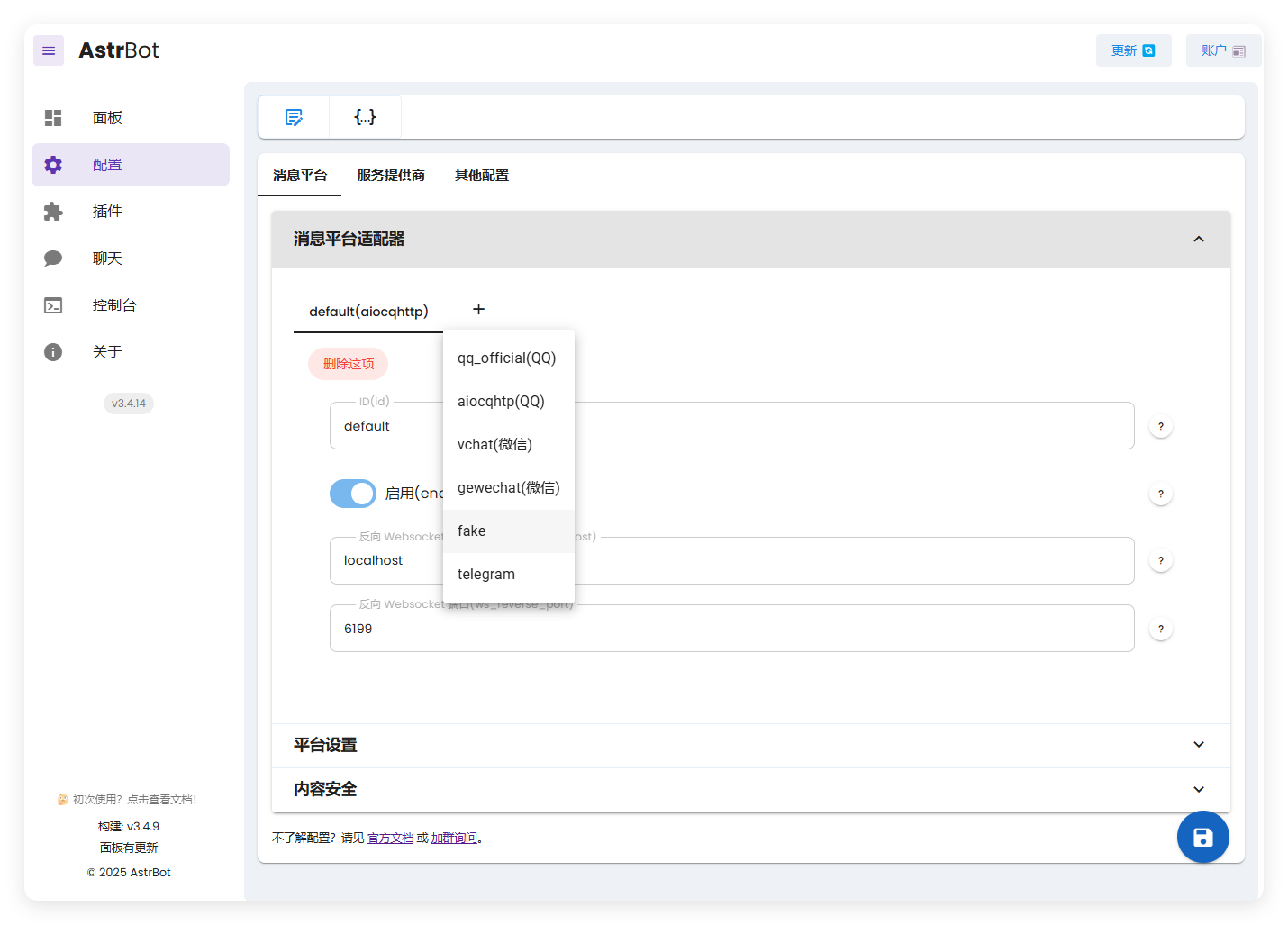
Once set up, run AstrBot:
|
|
|
|
|
|
|
|
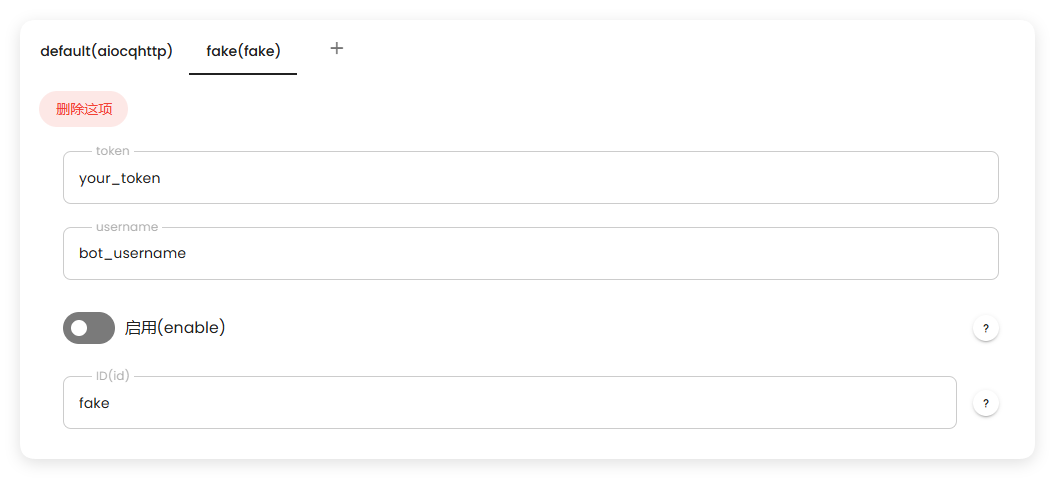
The `fake` adapter we created now appears here.
|
|
|
|
|
|
|
|
After starting, you can see it working correctly:
|
|
|
|

|
|
|
|
|
|
If you have any questions, feel free to join the community group and ask~
|